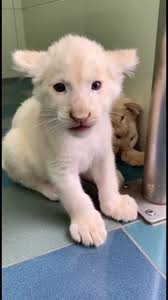
In a remarkable and unexpected event, Golden Canopy Zoo announced the birth of a rare leopon, a hybrid offspring of a male leopard and a lioness, marking one of the few documented cases of its kind in recent years.
The cub, named Kael, was born in the early hours of March 19 and weighed approximately 1.4 kilograms (3.1 pounds) at birth — slightly larger than an average leopard cub but smaller than a typical lion cub. Zoo veterinarians report that Kael is in stable condition and has already begun nursing under close supervision.
An Extraordinary Biological Event
Leopons are extremely rare in captivity and virtually nonexistent in the wild, as lions and leopards inhabit different regions and exhibit distinct behaviors that prevent natural interbreeding. According to zoologists at Golden Canopy Zoo, this birth was not part of a planned breeding program but occurred due to an unusual lapse in enclosure separation protocols, now under internal review.
"From a biological standpoint, this is an extraordinary event. Kael presents a fascinating combination of traits — early observations show a lion-like skeletal structure and limb strength, paired with a distinct rosette-patterned coat inherited from the leopard lineage." — Zoo's lead wildlife specialist
At just a day old, Kael already displays notable physical characteristics:
- A broad head and developing muscular frame typical of lion cubs
- A sleek, spotted coat with clearly defined leopard rosettes
- A long tail with a slight tuft, suggesting mixed lineage traits
Behavioral Observations
Behaviorally, caretakers have observed that the cub is unusually alert and responsive, exhibiting quick, precise movements more characteristic of leopard cubs, while maintaining a calm and steady temperament often associated with lions.
Zoo officials estimate that if Kael develops normally, he could reach a weight of 90–140 kilograms (198–308 pounds) in adulthood, depending on which parental traits become more dominant. However, experts caution that hybrid animals often face health complications, including developmental challenges and reduced lifespans.
Scientific Interest and Ethical Debate
Despite these concerns, Kael has already become a focal point of attention for both scientists and visitors. The zoo has restricted public access for now, allowing only veterinary staff and researchers to monitor his development closely.
"While this is undeniably a rare and captivating occurrence, our priority is the animal's welfare. We are committed to ensuring Kael receives the highest level of care and monitoring." — Golden Canopy Zoo official release
The birth has sparked renewed discussion in the scientific community regarding hybridization in big cats — a practice widely discouraged in modern conservation due to ethical considerations and lack of ecological value.
Still, for now, Kael stands as a living anomaly — a creature that blends the stealth of a leopard with the power of a lion, offering a rare glimpse into the complex possibilities of feline genetics.
As one visitor remarked after hearing the news: "It's like seeing two kings of the wild combined into one. You don't expect something like this to exist — but somehow, it does."